Whats My IP NordVPN: How to Check Your IP Address
Find your current IP address, understand what NordVPN changes, and troubleshoot if your IP doesn’t look right.
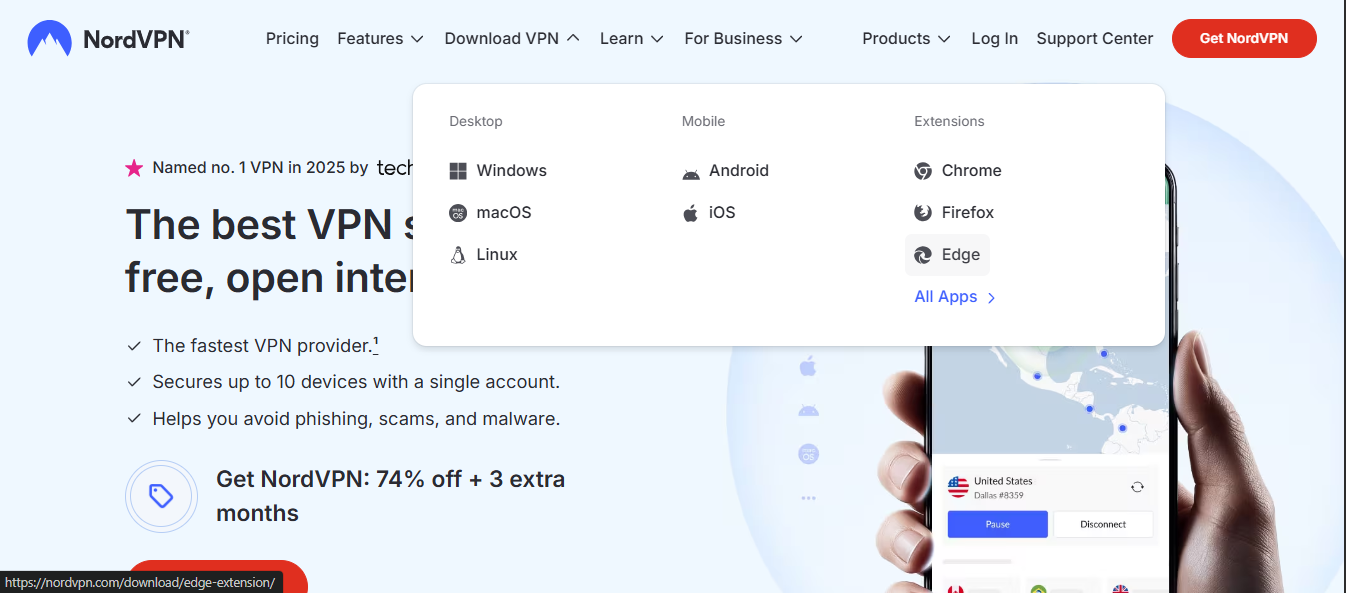
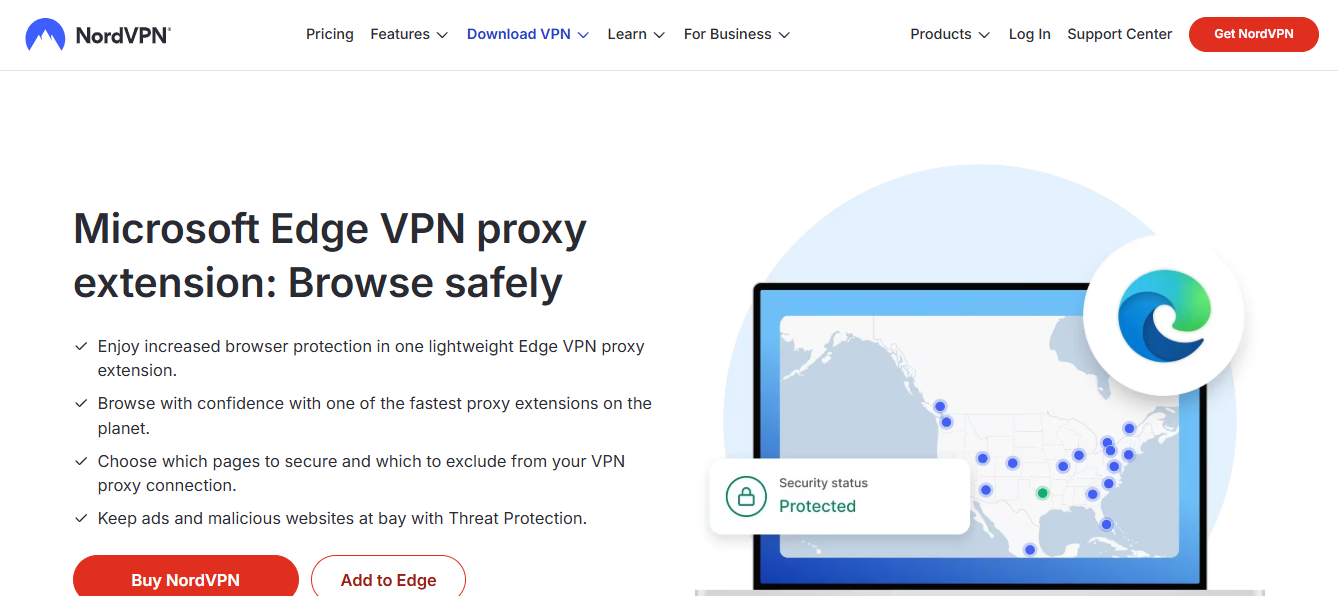
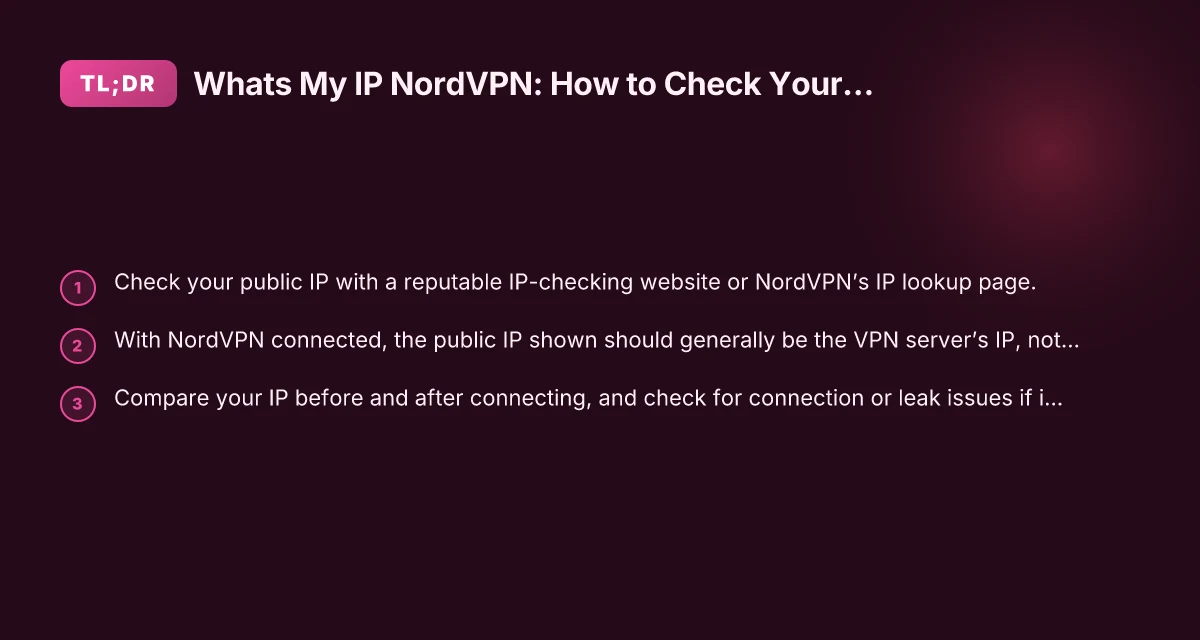
If you’re asking “whats my ip NordVPN,” open an IP-checking website and note the public IP address it displays. Then connect to NordVPN and refresh the page. If the address changes, the site is showing the IP associated with your VPN connection. Your device still has a local IP on your home or office network, but websites usually see your public-facing IP.

Editor's pick: NordVPN — fast, secure VPN — Strong encryption, a no-logs policy and apps for every device. 30-day money-back guarantee. Get NordVPN →
Ways to check your IP address
| Option | What it checks | Shows location? | Requires NordVPN? | Best for |
|---|---|---|---|---|
| NordVPN app | VPN connection status | No | Yes | Checking whether the VPN is connected |
| NordVPN IP checker | Public IP address | Often | No | A quick IP check |
| Search for “what is my IP” | Public IP address | Often | No | A simple browser check |
| IP lookup website | IP and approximate location | Yes | No | Reviewing visible IP details |
| DNS leak test | DNS requests | Sometimes | No | Checking DNS privacy |
| Compare before and after | Whether the public IP changed | Sometimes | No | Verifying a VPN connection |
Compiled November 2026; check the provider's site for current details.
| VPN | Obfuscation | From / month | Plan | Free plan | Refund | Alipay | UnionPay | Crypto | Website opens in China | Trustpilot | |
|---|---|---|---|---|---|---|---|---|---|---|---|
 NordVPN | Turn on manually Obfuscated Servers / NordWhisper | $3.49/mo | 27 months: $94.23 | No | 30 days | ? | ✗ | ✓ | ✓ | ✗ Blocked | 4.2/5 (51,628 reviews) |
 ZoogVPN | Turn on manually Shadow | $2.49/mo | 27 months: $59.99 | Yes | 7 days | ✓ | ✓ | ✓ | ✓ | Official site blocked; our special link opens (4.4 s) | 4.2/5 (195 reviews) |
 ExpressVPN | ✓ On by default all servers | $3.00/mo | 28 months: $84 | No | 30 days | ✗ | ✗ | ✓ | ✗ | ✗ Blocked | 4.4/5 (29,706 reviews) |
 Surfshark | ✓ On by default Camouflage, with OpenVPN | See site | See site | No | 30 days | ✗ | ✗ | ✗ | ✓ | ✗ Blocked | 4.3/5 (31,823 reviews) |
 Proton VPN | Turn on manually Stealth, free plan too | $2.99/mo | 12 months: $35.88 | Yes | 30 days | ✗ | ✗ | ✗ | ✓ | ✗ Blocked | 2.1/5 (1,040 reviews) |
 Astrill VPN | Turn on manually StealthVPN / OpenWeb | $12.50/mo | 24 months: $300 | No | See site | ✗ | ✗ | ✗ | ✓ | ✗ Blocked | 1.3/5 (110 reviews) |
 Private Internet Access | Turn on manually Shadowsocks, OpenVPN only | $2.03/mo | 40 months: $81.2 | No | 30 days | ✗ | ✗ | ✗ | ✗ | ✗ Blocked | 4.2/5 (11,033 reviews) |
 CyberGhost | Turn on manually selected servers | $2.19/mo | 28 months: $61.32 | No | 45 days | ✗ | ✗ | ✗ | ✓ | ✗ Blocked | 4.0/5 (24,178 reviews) |
 PureVPN | Turn on manually switch to OpenVPN | $1.69/mo | 60 months: $101.55 | No | 31 days | ? | ? | ✗ | ✓ | ✗ Blocked | 4.4/5 (17,994 reviews) |
 AdGuard VPN | ✓ On by default TrustTunnel | $2.99/mo | 24 months: $71.76 | Yes | 30 days | ✓ | ✗ | ✓ | ✓ | Official site blocked; our special link opens (3.7 s) | 4.3/5 (290 reviews) |
 Mullvad | Turn on manually QUIC / Shadowsocks / LWO | $5.61/mo | €5/mo | No | 14 days | ✗ | ✗ | ✗ | ✓ | ✗ Blocked | 3.2/5 (192 reviews) |
 Windscribe | Turn on manually Stealth / WStunnel | $5.75/mo | 12 months: $69 | Yes | See site | ✗ | ✗ | ✗ | ✓ | ✗ Blocked | 4.7/5 (13,355 reviews) |
 StrongVPN | Turn on manually Scramble, OpenVPN TCP | See site | See site | No | 30 days | ✓ | ✗ | ✗ | ✗ | ✗ Blocked | 4.4/5 (2,695 reviews) |
 LightXtreme 闪连 | Not listed | $7.08/mo | 12 months: $84.99 | Yes | 30 days | ✓ | ✓ | ✓ | ✓ | ✓ Yes (3.5 s) | No page |
Prices checked 2026-11-10 on each vendor's pricing page (cheapest long plan, USD). Check the vendor's checkout for the final price.
Obfuscation checked 2026-11-14 on each vendor's site and help center: "on by default" = nothing to set; "turn on manually" = switch protocol or mode in settings; "not listed" = the vendor describes no obfuscation.
Payment methods checked 2026-11-10 on each vendor's payment pages: all 14 take cards and PayPal; ✗ = not listed, ? = the vendor's own pages disagree.
China access: whether the official website opens from mainland China networks (tests the website only, not the VPN connection). Last checked 2026-11-18 01:02 Beijing time.
Trustpilot score and review count checked 2026-11-10.
How to check your IP with NordVPN
You can check your address in a browser on your phone, tablet, or computer. Visit NordVPN’s IP lookup page or another reputable IP-checking site. The result may include your public IP address, approximate location, and internet service provider.
For a straightforward comparison:
- Disconnect from NordVPN.
- Open an IP-checking page and record the public IP.
- Connect to a NordVPN server.
- Refresh the page or open it in a private browser window.
- Compare the second result with the first.
The address shown after connecting should usually differ from the one shown before. The location may also reflect the VPN server’s location rather than your physical location. Location results are estimates, however, and databases may be out of date or imprecise.
If you only want to know your current IP, you don’t need to disconnect first. Check the address while NordVPN is connected, then consider whether you’re looking for the VPN-facing public IP or your regular internet connection’s IP. What Is an.ovpn File? How to Use and Troubleshoot It
What IP address does NordVPN show?
When NordVPN is connected, your internet traffic is routed through a VPN server. Websites generally see the server’s public IP address instead of the public IP assigned to your connection by your internet provider. That server address can be shared with other VPN users.
This is different from your device’s local IP address. A router assigns local addresses to devices on a network, such as a laptop or phone. These addresses help devices communicate within that network. They are not usually the address a website sees when you visit it.
| Address type | What it identifies | Typically visible to websites? |
|---|---|---|
| Public IP without a VPN | Your internet connection as it appears online | Yes |
| Public IP with NordVPN | The VPN server connection used for your traffic | Yes |
| Local IP | Your device within a home, office, or other local network | No |
A VPN changes the public IP that sites usually see, but it doesn’t make you anonymous in every respect. Websites may still recognize you through account sign-ins, cookies, browser settings, or other identifying information.
Why your IP might not change
If the same IP appears before and after you connect, first confirm that NordVPN says it is connected. Try disconnecting and reconnecting, or choose a different server and check again. Refresh the page because a result left open in a browser tab may not update automatically. What VPN Should I Use? A Practical Guide to Choosing the Right VPN
Other possible causes include:
- The VPN connection didn’t complete: Check the NordVPN app’s connection status and try another server.
- You’re checking a different device or browser: Make sure the IP check runs on the device using NordVPN.
- The page is showing cached information: Reload it, open a private window, or use a different IP-checking service.
- Split tunneling is enabled: Some apps or websites may be excluded from the VPN. Review your NordVPN settings if available on your device.
- A network or app issue is interfering: Restart the app or device and test the connection again.
If the displayed address differs from your usual public IP but shows a nearby or unexpected location, that alone doesn’t mean NordVPN has failed. IP geolocation is approximate, and the address may be registered to a data center or mapped to a location that doesn’t match the physical server.
What can affect the IP address NordVPN shows?
| Situation | IP shown to websites | Location shown | Expected result |
|---|---|---|---|
| NordVPN disconnected | Your regular public IP | Your network’s approximate location | No VPN IP |
| NordVPN connected | VPN server IP | Server’s approximate location | IP should differ |
| Different VPN server selected | Newly assigned server IP | Selected server’s location | Location may change |
| Same server reconnected | May be the same or a different IP | Selected server’s location | IP can vary |
| Split tunneling enabled | Depends on app routing | Depends on routed traffic | Some traffic may use your regular IP |
| Browser using a proxy | Proxy IP may appear | Proxy’s approximate location | Browser result may differ |
Compiled November 2026; check the provider's site for current details. Best Free VPN for Microsoft Edge: Safe, Practical Options
How to check for an IP or DNS leak
A changed public IP is a useful first check, but you can also test whether requests are revealing information outside the VPN tunnel. Reputable online IP, DNS, and WebRTC leak tests can help you inspect what a browser or service can detect.
To run a basic check:
- Connect to NordVPN and verify the app reports an active connection.
- Visit an IP-checking page and confirm that the public IP is not your usual one.
- Run a DNS leak test and review the listed DNS servers.
- If you use a WebRTC test, check whether it reveals an address you weren’t expecting.
- Repeat the test after reconnecting if the results seem inconsistent.
Interpret results carefully. A DNS provider’s name or a location estimate may not identify your physical location. If a test appears to show your regular public IP while the VPN is connected, reconnect, try another server, update the app, and test again. You can also consult NordVPN’s support guidance for your operating system and settings. Avoid entering sensitive information on unfamiliar testing sites.
Public IP, location, and privacy basics
Your public IP can reveal information such as the network provider and an approximate region. It generally does not reveal a precise home address by itself, but it can be linked to activity by websites, network operators, or other parties under certain circumstances. Why Doesn’t ThisVid Work With VPN? Common Causes and Fixes
A VPN helps route traffic through its server and replaces the public IP that websites typically see with the server’s IP. It does not automatically prevent tracking by accounts you use, cookies you accept, or information you choose to share. For stronger privacy habits, keep your VPN app updated, use secure account passwords, and review browser privacy settings.
If you’re checking your IP because a website is showing the wrong country, connect to a server in the country you want and check again. Some services also use their own location data, saved cookies, or account settings, so changing your IP may not immediately change the content they show.
Troubleshooting IP or DNS leak concerns
| Check | What to do | Expected result | If the result looks wrong |
|---|---|---|---|
| VPN connection | Confirm NordVPN says connected | Active VPN connection | Reconnect to a server |
| Public IP | Check it before and after connecting | VPN IP differs from regular IP | Try another server |
| IP location | Compare lookup location with server | Approximate match | Check the selected server |
| DNS leak | Run a DNS leak test while connected | DNS requests use VPN-associated servers | Reconnect and test again |
| Split tunneling | Review app and website routing | Intended traffic uses VPN | Adjust routing settings |
| Browser settings | Check proxy and privacy extensions | No unexpected routing | Disable conflicting settings |
| Repeat test | Recheck after changes | Consistent VPN results | Contact NordVPN support |
Compiled November 2026; check the provider's site for current details. What Is an Obfuscated VPN? How It Works and When to Use One
Recommendation
For the quickest answer to “whats my ip NordVPN,” check your public IP while connected to NordVPN and compare it with the address shown when disconnected. If the connected address is different, your traffic is generally appearing under the VPN server’s IP. If it isn’t, verify the connection, try another server, and run a reputable leak test before relying on the result.